I keep saying I’ll eat better: How my smart calendar started feeding me real meals
You know that moment when you promise yourself, "Tomorrow, I’ll finally eat right, move more, sleep well"? I said it for years—until my phone started calling my bluff. It wasn’t guilt or willpower that changed me, but a simple shift: letting my health data talk to my daily schedule. What if your calendar didn’t just remind you, but actually helped you live better? That’s exactly what happened when I stopped treating wellness as a chore and started seeing it as a rhythm built into my day. I didn’t need more discipline. I needed a smarter way to show up for myself—one that worked with my life, not against it.
The Lie We All Tell Ourselves: "I’ll Start Living Healthy Tomorrow"
How many times have you looked at the clock, realizing it’s 8 PM and you haven’t eaten a real meal? Or skipped your walk because the kids needed rides, dinner needed making, and emails kept piling up? I used to do this weekly—sometimes daily. I’d tell myself, "I’ll start fresh tomorrow." And every morning, I’d mean it. But by 2 PM, a back-to-back meeting would cancel my lunch break, and by 7 PM, I’d be standing in front of the fridge, too tired to cook, reaching for the takeout menu instead.
It wasn’t that I didn’t care about my health. I did. I read articles, bought healthy groceries, even downloaded meditation apps. But intention didn’t equal action. The truth was, I wasn’t failing because I lacked willpower—I was failing because I hadn’t made space for those good habits in my actual day. My calendar was packed, but it was full of everyone else’s needs. Mine were buried under to-do lists and last-minute changes.
And I know I’m not alone. So many of us—especially women in our 30s, 40s, and beyond—feel like we’re constantly running on empty, trying to do it all. We promise ourselves we’ll eat better, move more, sleep earlier. But the moment real life hits—school pickups, work deadlines, family needs—those promises fall apart. The guilt builds. We feel like we’ve failed. But what if the problem isn’t us? What if it’s the system we’re using to plan our days?
That was my turning point. I realized I wasn’t lazy or weak. I was just planning wrong. I needed a system that didn’t rely on perfect motivation, but instead created natural space for self-care. And that’s when I looked at my phone—not as a distraction, but as a partner.
My Phone Knew I Was Failing Before I Did
It started with curiosity. I’d been wearing a simple fitness tracker for a few months—mostly to count steps and monitor sleep. One Sunday, feeling drained and frustrated, I opened the app out of habit. I scrolled through my weekly data: sleep scores, heart rate trends, activity minutes. And something caught my eye. On days when I slept poorly, I had lower energy, yes—but those nights always followed late dinners. And the late dinners? They happened after long work blocks with no breaks. No lunch. No time to cook.
I pulled up my calendar from that week and laid it side by side with my health data. The pattern was undeniable. Every time I had back-to-back meetings from 10 to 3, I skipped lunch. Every time I worked through dinner, my sleep suffered. And every time my sleep was poor, my next day’s stress markers were higher. My body wasn’t failing me—my schedule was failing it.
What shocked me most was how predictable it all was. My phone wasn’t just tracking my failures—it was quietly documenting the cause. It wasn’t judging me. It was showing me the truth: I couldn’t expect to eat well or feel energized if I didn’t plan for those things. My calendar wasn’t a neutral tool. It was actively shaping my health, whether I liked it or not.
And here’s the thing—my phone already knew what I needed. It just wasn’t allowed to speak up. My health data and my daily schedule were living in separate worlds. One tracked how I felt. The other told me what to do. They weren’t talking. And until they did, I’d keep making the same promises I couldn’t keep.
What Happened When I Let My Health Data Talk to My Calendar
So I decided to connect them. Not with fancy tech skills—just using tools I already had. I use an iPhone and Google Calendar, and both support basic automation through built-in features like Shortcuts and Google Assistant routines. I didn’t need to code or download obscure apps. I just needed to give my phone permission to help.
The first thing I did was set up a simple rule: if my sleep score dropped below a certain level, my calendar would automatically nudge my morning meetings by 30 minutes. Not cancel them—just gently shift them. The idea wasn’t to avoid work, but to protect my energy. I also created a reminder: if I missed my step goal by 6 PM, my phone would suggest a 10-minute walk after dinner. It even factored in weather and daylight.
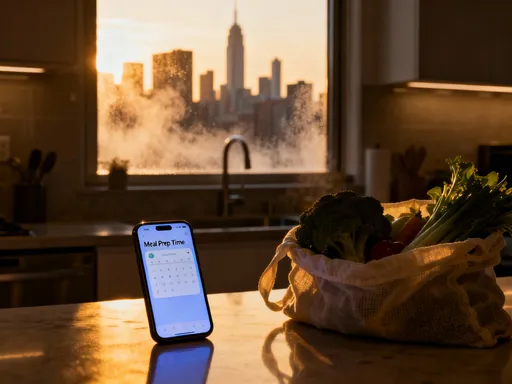
Then came the game-changer: meal planning. I linked my grocery delivery app to my calendar. Every time a delivery was scheduled, a block of “kitchen time” appeared the next evening. Not a vague “cook dinner” note—but a real 45-minute appointment labeled “Make soup, pack lunches.” Suddenly, cooking wasn’t something I had to remember. It was something my day was designed to support.
At first, I worried it would feel robotic. But the opposite happened. It felt kinder. Instead of pushing myself to power through fatigue, my schedule started responding to it. If I had a stressful day—detected by elevated heart rate or low activity—the calendar would suggest a breathing break or a stretch session. It wasn’t rigid. It was adaptive. Like having a thoughtful friend quietly saying, “Hey, you’ve had a lot. Let’s make space for you too.”
Small Shifts, Big Results: How One Change Transformed My Daily Rhythm
The changes weren’t dramatic, but they were powerful. Within two weeks, I was cooking at home four nights a week—up from one. Not because I suddenly had more time, but because time was now protected. That 45-minute kitchen block showed up like any other meeting. And just like I wouldn’t skip a work call, I stopped skipping dinner prep.
Hydration improved too. I used to forget to drink water until I felt a headache coming on. Now, my phone sends a gentle reminder every time a meeting ends—tied to my calendar. “Great meeting! Time to refill your water bottle.” It sounds small, but it made a difference. I started noticing I had more focus, less afternoon fatigue.
And movement became easier. Instead of vowing to “exercise more,” I let my calendar offer micro-moments. A 7-minute stretch block after long sits. A 15-minute walk suggested when my stress levels rose. These weren’t workouts in the traditional sense—but they added up. I wasn’t chasing perfection. I was building consistency, one small win at a time.
The biggest surprise? I stopped feeling guilty. I wasn’t relying on willpower anymore. I wasn’t beating myself up for skipping a plan that never had a chance. Instead, I had a system that anticipated my needs and made healthy choices the easy ones. Decision fatigue dropped. I had more mental space for the things that really mattered—my family, my work, my peace.
It’s Not Just About Me—My Family Started Living Better Too
What I didn’t expect was how this would ripple through my home. My kids started noticing. “Mom, you’re cooking again!” one said, surprised. Another asked to help chop vegetables during my kitchen block. I realized they weren’t just seeing a meal—they were seeing me showing up for myself. And when I model self-care, they learn it too.
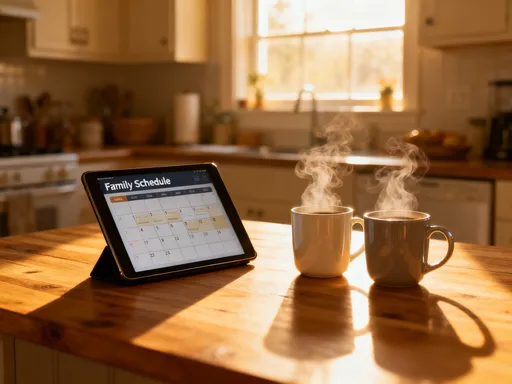
I also shared a family calendar view with my partner. We added joint blocks: “Family walk Sundays,” “Meal prep together,” “No screens after 8.” These weren’t strict rules—just invitations. But they created rhythm. We started eating dinner at the table more often. Fewer last-minute takeout orders. More conversations.
My partner noticed the difference in me too. “You seem less stressed,” he said. “And you’re not rescheduling things last minute as much.” That’s because my calendar now reflected my energy, not just my obligations. If I was running low, it didn’t push me to overcommit. It protected me. And in doing so, it helped me show up better—for him, for the kids, for everyone.
It wasn’t about creating a perfect household. It was about creating a more aware one. Technology didn’t replace our humanity—it supported it. We became more in tune with our needs, not because we were trying harder, but because our tools were helping us pay attention.
How You Can Start Today (No Tech Expertise Needed)
You don’t need a fancy device or a tech degree to start. If you have a smartphone and a calendar app—whether it’s Apple, Google, or Samsung—you already have what you need. The key is to start small. Pick one habit you’d like to support. Maybe it’s eating lunch, drinking water, or taking a short walk. Then, think about how your phone could help protect that time.
Here’s how to begin: open your calendar and block 20 minutes for lunch every day. Label it “Protected Time.” Then, set a daily reminder: “Did you eat?” If you use a fitness tracker, check if it allows custom alerts. Most do. You can set a notification for 3 PM: “Time to stretch or walk.” It doesn’t have to be automated right away. Even manual blocks create intention.
If you’re ready to go a step further, explore automation. On iPhone, use the Shortcuts app. You can create a simple rule: “If my bedtime is after 11 PM, remind me to adjust tomorrow’s morning schedule.” On Android, Google Assistant routines can do similar things. “When I finish work, play calming music and suggest a walk.”
And if grocery shopping is a hurdle, link your delivery app to your calendar. Every time you order, add a cooking block for the next day. Make it visual. Make it real. You don’t need to track every calorie or step. You just need to create space for what matters.
Remember, this isn’t about perfection. It’s about progress. Try one thing this week. See how it feels. Adjust as needed. The goal isn’t to become a tech expert—it’s to become a better supporter of yourself.
Living Well Isn’t About Perfection—It’s About Smart Support
Looking back, I realize I spent years blaming myself for not eating better, not moving enough, not sleeping well. But the truth is, I was trying to live a healthy life with a schedule that didn’t support it. No amount of motivation can fix a day that’s completely full—especially when it’s full of everyone else’s needs.
What changed wasn’t my willpower. It was my strategy. By letting my health data and my calendar work together, I created a system that respected my body, my energy, and my time. I stopped fighting myself and started working with myself.
And the beautiful part? This isn’t just about me. It’s about all of us who want to feel better, live better, and show up fully—for our families, our work, and ourselves. We don’t need more hours in the day. We need smarter ways to use the ones we have.
So the next time you catch yourself saying, “I’ll eat better tomorrow,” pause. What if tomorrow could be different—not because you’ll try harder, but because your day is designed to help you succeed? Your phone isn’t just a device. It’s a quiet ally, ready to support you in ways you might not have imagined. All it takes is one small shift: letting it in. Let your calendar do more than remind you. Let it care for you. Because you deserve a life that doesn’t just fit—it flows.