I’ll just drive home the old way — until my navigation app learned my nights
We’ve all been there—exhausted after a long day, dreading the drive home through dark, unfamiliar streets. You tell yourself you don’t need help, that you remember the route. But then you miss a turn, anxiety creeps in, and suddenly you're lost, tired, and frustrated. I used to pride myself on knowing my way, until one quiet evening when a gentle voice from my phone said, “Recalculating,” and changed everything. That moment wasn’t about directions—it was about comfort, safety, and how a simple app can make the night feel a little kinder.
The Lie We Tell Ourselves After Dark
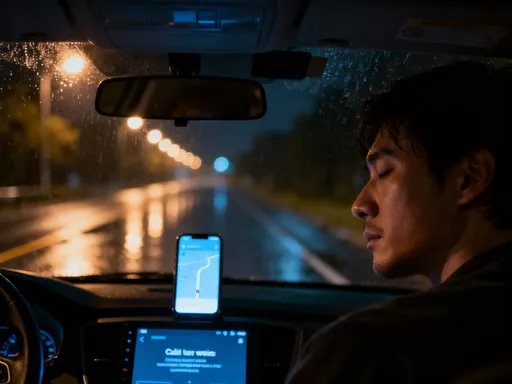
How many times have you said, “I don’t need GPS—I know this route,” only to find yourself squinting at street signs under dim orange lights? We tell ourselves we’re strong, capable, in control. But nighttime driving isn’t just about knowing where you’re going. It’s about fighting fatigue, managing distraction, and staying alert when your body is begging for rest. I remember one winter night, after tucking my youngest into bed and finishing a stack of emails, I got in the car to drive to my sister’s house. It was only twenty minutes away, a route I’d taken a hundred times. But that night, my mind was heavy, my eyes were tired, and halfway there, I missed the turnoff completely. My heart jumped. Not because I was in danger—but because I felt that sudden, sharp wave of stress. I was alone, it was dark, and I didn’t want to be wrong. That moment cracked open a truth I’d been avoiding: refusing help isn’t strength. It’s just stubbornness dressed up as independence. And it’s exhausting.
Driving at night changes everything. The world feels smaller, more intimate, but also more uncertain. Streetlights blur into streaks. Shadows stretch across the road. Your brain works harder to process what it sees, and if you’re already drained from work, parenting, or just the weight of daily life, that extra effort can tip you into overwhelm. I’ve had friends admit they avoid night drives altogether. Others take the same route every time, not because it’s the best, but because it feels safe. We build these little routines to protect ourselves, but what if we didn’t have to? What if the tools we already carry in our pockets could do some of that emotional labor for us? That night, after I finally found my way, I opened my navigation app—not just to find the route, but to let it find me.
How Navigation Apps Become Quiet Companions
At first, I thought of my navigation app as just a tool—something to use when I was in a new city or meeting a friend at a restaurant I’d never been to. But slowly, I started noticing how it behaved differently at night. The screen switched to a deep, soft black with glowing white lines. No blinding brightness to ruin my night vision. The voice was calm, unhurried, like someone who knew I didn’t need to be startled. “In 500 feet, turn right.” Not urgent. Not loud. Just there. And over time, it began to anticipate. I’d get in the car on a Friday evening, and without typing a single word, it would say, “Going home?” with that quiet confidence. Sometimes, it even suggested a slightly longer route—one that avoided construction, or took me past the lake, where the trees were lit up with holiday lights. I didn’t ask for it. I didn’t plan it. But it felt like a gift.
That’s when I realized: this wasn’t just navigation. It was care. The app wasn’t just tracking my location—it was learning my rhythm. It knew I left work around 6:15 on most days. It knew I stopped at the grocery store on Tuesdays. It knew that on Sundays, I drove to my mom’s, and that I liked to park in the back of her complex, near the rose bushes, where the light was better. These small things added up. The cognitive load of driving—the constant checking, the mental math of turns and exits—began to fade. I could turn on a podcast, or call a friend, or just sit in silence, listening to the hum of the road. The app didn’t demand my attention. It protected it. And in doing so, it gave me something I hadn’t realized I was missing: peace. Not the kind that comes from everything being perfect, but the kind that comes from knowing you’re not alone in the dark.
Safety That Doesn’t Feel Like Surveillance
I know what you’re thinking. “Isn’t it creepy? Doesn’t it feel like Big Brother?” I felt that way too, at first. I didn’t want to be tracked. I didn’t want my data used for ads or sold to companies. And I still don’t. But here’s what I’ve learned: not all data use is invasive. Some of it is protective. Modern navigation apps don’t just collect information—they use it to create a safer experience. For example, if I leave work at 9 p.m.—which is unusual for me—the app might gently suggest, “Would you like to share your ETA with a trusted contact?” It doesn’t assume something’s wrong. It just notices a change and offers support. It’s like a friend glancing over and saying, “You okay?” without making a big deal out of it.
And that matters. Because safety isn’t just about avoiding accidents. It’s about feeling secure. It’s about knowing someone—or something—is paying attention. I started using the “share location” feature with my sister, not because I thought I’d get into trouble, but because it gave her peace of mind. When she sees my little dot moving steadily toward her house, she doesn’t worry. And when I arrive, she gets a quiet notification. No need to text. No stress. Just connection. The app doesn’t replace human care—it enhances it. It bridges the gap between “I’m fine” and “I made it.” And it does it without drama, without demands. I still control what I share and with whom. But having the option? That’s freedom. Because true safety isn’t about isolation. It’s about being seen, gently, when it matters.
When the App Knows You Better Than You Do
One night, I noticed something strange. I was driving home from a late appointment, and the app rerouted me—away from my usual shortcut through a quiet residential neighborhood. I almost argued with it. “I know this street,” I muttered. But then I saw why: the shortcut was dark. No streetlights. Overgrown trees. And it had rained earlier, so the pavement was slick and reflective in patches. The app had chosen a slightly longer route, but one with better lighting, wider lanes, and less pedestrian traffic. It wasn’t faster. But it was calmer. Safer. And it had made that choice without me saying a word.
That’s when it hit me: the app wasn’t just giving me directions. It was making decisions based on what it knew about me—not just my habits, but my comfort. It had learned that I preferred well-lit roads at night. That I avoided gravel or unpaved paths. That I liked smooth transitions, not sharp turns. It wasn’t just calculating distance or speed. It was factoring in things like road quality, visibility, and even the emotional tone of the drive. I started paying attention, and I realized it consistently avoided certain streets after dark, even when they were technically faster. It was protecting me in ways I hadn’t asked for—but deeply appreciated. This isn’t artificial intelligence in the sci-fi sense. It’s thoughtful design. It’s technology that doesn’t just respond to commands, but anticipates needs. And sometimes, it sees what we’re too tired to notice.
Teaching Your App the Rhythm of Your Life
Here’s a little secret: the more you teach your app, the more it gives back. At first, I just used it to get from point A to point B. But then I started customizing. I saved “Home” with two addresses—one for my house, one for my mom’s, since I split my time helping her. I labeled my daughter’s school, my gym, my favorite coffee shop. I even set up a routine: “Leave for work at 7:30 a.m., arrive by 8:15.” Now, every morning, the app automatically shows me traffic conditions and suggests the best route. If there’s an accident, it reroutes me before I even notice.
But the real game-changer was adjusting the voice settings for nighttime. I turned down the volume slightly and chose a softer voice—one that felt more like a companion than a command center. I also enabled “Do Not Disturb While Driving,” so my phone wouldn’t buzz with emails or texts. That small change made a huge difference. I wasn’t tempted to glance at the screen. I could focus on the road, on my breathing, on the music. And if I did need to respond to something urgent, I could do it hands-free. These tweaks didn’t take long, but they transformed the experience. The app stopped feeling like a generic tool and started feeling like it was made just for me. It wasn’t just following my life—it was syncing with it. And that made all the difference.
The Emotional Relief of Letting Go
I used to think that needing help meant I was failing. That if I couldn’t remember every turn, every exit, every shortcut, I was somehow less capable. But here’s what I’ve learned: the strongest thing I’ve done lately is let go. Letting the app guide me didn’t make me weaker. It made me freer. I arrived home with less tension in my shoulders, less noise in my head. I had more patience for my family. More energy to listen. More space to breathe. One night, my daughter said, “Mom, you seem happier when you drive now.” I hadn’t even realized it, but she was right.
There’s a quiet dignity in independence, yes. But there’s also wisdom in knowing when to accept support. We don’t have to carry everything alone. We don’t have to prove anything by refusing help. In fact, using tools that make life easier isn’t giving up—it’s growing up. It’s choosing well-being over ego. And for women, especially those of us juggling work, family, and caregiving, that choice is revolutionary. We spend so much time making sure everyone else is okay. What if we designed our own lives to feel okay too? What if we let technology handle the small stresses so we could focus on what really matters—connection, rest, joy? That’s not weakness. That’s strategy. And it’s one of the most empowering things I’ve ever done.
Reclaiming the Night, One Drive at a Time
Driving at night used to feel like a battle. Now, it feels like a transition—a quiet space between the chaos of the day and the comfort of home. I don’t dread it anymore. I even look forward to it sometimes. The glow of the dashboard. The soft voice reminding me to turn left. The way the city lights blur into gold as I move through them. These moments used to be filled with tension. Now, they’re filled with calm. And that change didn’t happen because I got stronger. It happened because I allowed myself to be supported.
Navigation apps aren’t just about getting somewhere. They’re about how we arrive. Do we show up stressed and drained? Or do we arrive with our energy intact, our mind clear, our heart open? The best technology doesn’t shout about its features. It doesn’t dazzle with speed or specs. It simply makes life a little softer, a little safer, a little kinder. It learns our rhythms. It protects our peace. It helps us move through the world with less fear and more grace. And in a time when so much feels uncertain, that’s a gift. So the next time you’re in the car, tired and unsure, don’t feel bad for turning on your app. Let it guide you. Let it learn you. Because the road home shouldn’t be a test of endurance. It should be the first step toward rest. And sometimes, the most powerful thing we can do is let a gentle voice say, “Recalculating,” and trust that it’s leading us exactly where we need to go.