I used to dread leaving home: How my smart security system turned strangers into neighbors
You know that knot in your stomach when you close the door behind you? I did—every single time. For years, I worried about break-ins, false alarms, forgotten locks. Every text notification made my heart race—was it a friend or an alert? I avoided trips, declined invites, and lived in reactive mode. The fear of the unknown shaped my routine. Then I got a smart security system. It didn’t just protect my home—it changed how I connect with people. Over time, it quietly opened doors to conversations, trust, and a stronger circle I never expected. This is how it happened.
The Anxiety of Being Away
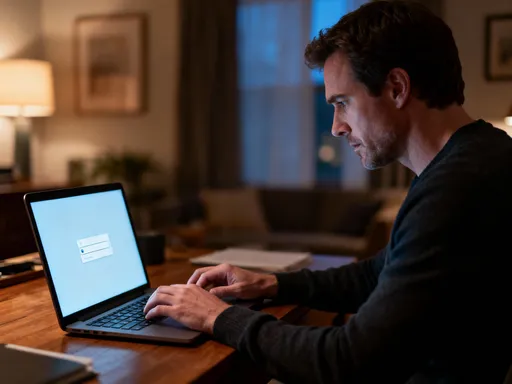
I remember the exact moment I realized something had to change. It was 2 a.m., and I was lying in bed, wide awake, replaying the last ten minutes before I left for work that morning. Did I lock the front door? I had a habit of turning the knob twice, but that day I was rushing. And the back gate—did I remember to latch it after the dog went out? My mind raced through every possible scenario: a shadow in the yard, a window left cracked, someone slipping in while I was miles away, unaware. That constant hum of worry wasn’t just background noise—it was a full-time job. I wasn’t just managing a home. I was managing fear.
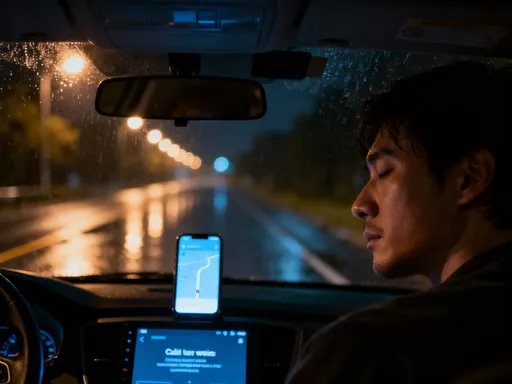
Living alone in a quiet neighborhood should’ve felt peaceful. But peace was something I read about, not something I experienced. I canceled weekend getaways because I couldn’t shake the idea that something might go wrong while I was gone. Even short errands felt risky. I’d pull over on the way to the grocery store just to double-check the lock status on my phone. And when my phone buzzed, my stomach dropped—every time. Was it a message from my sister? A photo from a friend’s birthday? Or another false alarm from the motion sensor near the laundry room?
The truth is, I wasn’t just afraid of crime. I was afraid of losing control. Of being powerless. And that fear didn’t just live in my head—it shaped my choices. I turned down invitations. I stopped hosting dinner. I even hesitated to walk my dog after dark, worried I’d leave the house unattended for too long. My home, which should’ve been my sanctuary, had become a source of stress. I needed a change. Not just a new lock or a louder alarm—but a real sense of peace. And I found it in the most unexpected place: a small camera mounted in my hallway.
First Signs of Connection
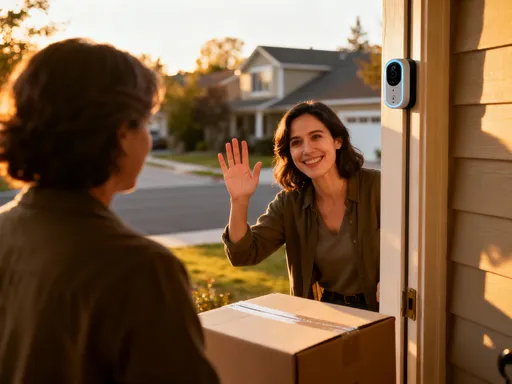
The first time the doorbell camera notified me of someone at my gate, I assumed it was a delivery. But when I opened the app, I saw Mrs. Patel from two doors down, umbrella in hand, looking uncertain. She wasn’t ringing—just standing there, glancing at my house, then at her own. My instinct was to ignore it. But something made me tap the talk button. “Hi there! Everything okay?” I asked, trying to sound warm and not at all suspicious.
She smiled, relieved. “Oh! I didn’t know you were home. I was wondering if I could borrow a cup of sugar. Mine spilled, and I’m in the middle of baking cookies for the school bake sale.” We both laughed—she remembered I had two kids, and I remembered she always brought extra treats to the block party. I buzzed her in, told her to help herself from the jar on the counter, and within minutes, we were chatting through the app about her grandson’s soccer game and my daughter’s science fair project. That small exchange lasted less than ten minutes. But it stayed with me.
What surprised me wasn’t that the camera caught her. It was that it gave me a way to respond—calmly, kindly, without opening the door or feeling exposed. Before, I might’ve missed her entirely or hesitated to answer, worried about safety. Now, I could see, hear, and speak—on my terms. And that tiny interaction opened a door, literally and figuratively. The next week, when the motion alert went off near my front steps, it wasn’t an intruder. It was Mr. Lee from across the street, returning a lost garden tool he found near the sidewalk. I saw him on camera, waved through the screen, and invited him to leave it by the porch. He left a note: “Thanks for the alert system. Made it easy to return this.”
These moments added up. The camera didn’t just show me who was outside. It helped me recognize faces. Names came back. Routines emerged. I started noticing when Mrs. Garcia took her daily walk, when the Johnson kids came home from school, when the mail carrier paused to water the community flowers. My street didn’t feel like a row of houses anymore. It felt like a neighborhood. And it wasn’t because people changed. It was because I could finally see them—and they could see me.
From Surveillance to Shared Awareness
Our building complex never had a real sense of community. Sure, we exchanged polite hellos, but that was about it. There was no shared communication—no bulletin board, no group chat, nothing. When someone lost their keys, we didn’t know. When packages went missing, we blamed the courier. When a strange car parked for hours, we whispered but never acted. We were all watching, but we weren’t watching together.
Then, after a few friendly exchanges through the doorbell app, I had an idea. I started a private WhatsApp group—just for our block—with a simple rule: no footage, no arguments, no drama. Just quick, non-sensitive updates. I posted first: “Package delivered to Unit 3—left by the front bench.” Then: “Dog wearing a red collar spotted near the park gate—seems friendly but lost.” Someone else added: “Saw a delivery van at Unit 7—driver left box at wrong door.”
At first, it felt odd. Were we overstepping? Was this too much? But the response was immediate and positive. People started replying with thanks, updates, even offers to help. When Mrs. Kim mentioned her groceries were delivered but she wasn’t home, two neighbors volunteered to bring them inside. When Mr. Bennett’s grandson left his bike outside overnight, three of us made sure it was moved to the sheltered rack. We weren’t sharing video clips or private data—just awareness. And that small shift changed everything.
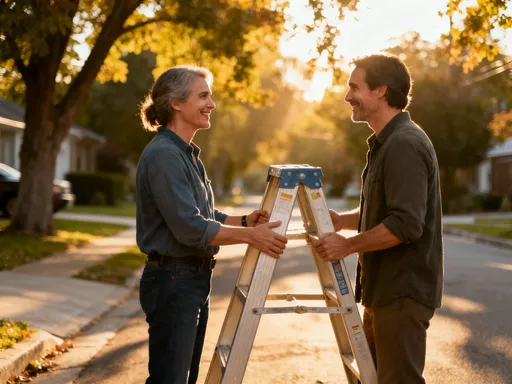
Trust grew slowly but steadily. People began waving more. Knocking before borrowing a ladder. Checking in if someone’s car was gone for days. The security system didn’t connect us directly, but it gave us a reason to pay attention—to care. We weren’t just protecting our own homes anymore. We were looking out for each other. And that collective mindset made us all feel safer, not because the world changed, but because we did.
Hosting with Confidence
One of the biggest shifts happened when my sister came to stay while I went on a long-overdue trip to visit my parents. In the past, I would’ve stressed for days—how to get her a key? What if she lost it? What if she forgot to lock up? I’d call her every night to remind her about the alarm. It wasn’t just inconvenient. It was exhausting.
This time, I set up a temporary access code through the smart lock app. I sent it to her with a message: “Welcome! Code works from 3 p.m. Monday to 10 a.m. Friday. Locks automatically at night.” She texted back, “This feels like magic.” And it kind of was. No key cutting, no hiding spares under mats, no risk of duplication. When she left, I deleted the code with one tap. Done. No follow-up, no stress.
But the real surprise came later. When I stayed at a friend’s house for a weekend, she used the same system. She sent me a code, showed me how to arm the alarm, and trusted me to handle it. We didn’t need to coordinate pickups or drop-offs. No awkward moments with keys in hand, no worrying about who had what. It felt natural. Respectful. Easy. And it made me realize something: technology wasn’t just making homes more secure. It was redefining hospitality.
Now, when friends plan to house-sit or stay over, we exchange access codes like phone numbers. “Here’s the Wi-Fi and the front door code—let yourself in!” It’s simple, safe, and strangely intimate. It says, “I trust you.” And that trust isn’t just about security. It’s about comfort, respect, and the ease of connection. My home isn’t locked away—it’s open, in the best way.
The Ripple Effect in Daily Life
Once I stopped living in constant worry, my life began to expand again. I said yes to weekend trips. I hosted book club at my place. I invited neighbors for lemonade in the yard. My home, which had felt like a fortress I was guarding, became a place people wanted to be. And that shift didn’t just affect me—it touched everyone around me.
My daughter noticed it first. “Mom, you’re happier when you’re not checking your phone all the time,” she said one evening. And she was right. I wasn’t distracted by alerts. I wasn’t mentally elsewhere. I was present. At dinner. At bedtime stories. At soccer games. The peace I gained wasn’t just about safety. It was about presence. And that made me a better mom, a better friend, a better version of myself.
Old friends reached out, surprised I was finally free for coffee. New neighbors introduced themselves, drawn by the warm light in my windows and the music drifting outside on summer nights. Even my parents, who once rolled their eyes at anything “techy,” started asking questions. “How does that camera work? Is it hard to set up?” Within months, they installed their own system. Now we share tips—how to adjust motion zones, when to silence alerts, which doorbell chime sounds most welcoming. We don’t share fears anymore. We share solutions.
The most beautiful part? This wasn’t about fancy gadgets or perfect automation. It was about freedom. The freedom to leave without dread. The freedom to invite. The freedom to trust. And with that freedom came connection—deeper, more meaningful, more human. The technology didn’t replace relationships. It created space for them to grow.
Learning the Rhythm of Trust
Of course, it wasn’t perfect from the start. I learned the hard way that too much sharing can be overwhelming. At one point, I was sending alerts for every package, every motion trigger, every visitor. The group chat started to feel like noise. One neighbor gently messaged me: “Love the updates, but maybe save the ‘cat on the fence’ alerts for next time?” I laughed, but I got the message. Not every moment needs to be shared.
I started being more intentional. Routine events—like regular deliveries or scheduled visits—got silent acknowledgments. I’d see them on camera, note them mentally, but not post. But if something unusual happened—a stranger lingering, a storm knocking down a branch, a lost pet—I’d share right away. We developed a rhythm. Quiet awareness for the everyday. Clear communication for what mattered.
We also learned to respect boundaries. No one posted footage. No one demanded explanations. If someone didn’t respond to a message, we didn’t assume the worst. We gave space. And in return, we received trust. The system didn’t force us to connect. It simply made it easier. It gave us a shared language—a way to say, “I see you. I’ve got your back.” And over time, that small assurance became the foundation of something bigger: a community that looked out for one another, not because they had to, but because they wanted to.
A Home That Opens More Than Doors
Looking back, the biggest change wasn’t the number of break-ins prevented or the perfect automation schedule. It wasn’t even the convenience of remote access or the peace of mind when traveling. The real transformation was in the way I experienced my world. My home didn’t just feel safer. It felt more alive. More connected. More like a part of something meaningful.
That knot in my stomach when I close the door? It’s gone. Not because the world is risk-free, but because I’m no longer facing it alone. I have a system that watches when I can’t. But more importantly, I have neighbors who notice. Friends who care. A community that’s paying attention—not out of suspicion, but out of care.
Smart technology didn’t just protect my home. It helped me open it. To guests. To conversations. To trust. It reminded me that safety isn’t just about locks and alarms. It’s about connection. About knowing you’re seen. About having people who will buzz in a neighbor needing sugar—and smile while they do it.
If you’re still hesitating, wondering if this kind of tech is right for you, I get it. I did too. But ask yourself: what could you do with a little more peace of mind? What trips would you take? What dinners would you host? What connections could grow if you weren’t holding your breath every time you walked away?
For me, it wasn’t just about feeling safe. It was about feeling free. And freedom, it turns out, is the best foundation for a life well lived. So go ahead—lock the door. Then step out, heart calm, knowing you’re protected not just by sensors and cameras, but by the quiet strength of community. Because sometimes, the most powerful security system isn’t the one you install. It’s the one you build, one hello at a time.